About Ambaji Temple
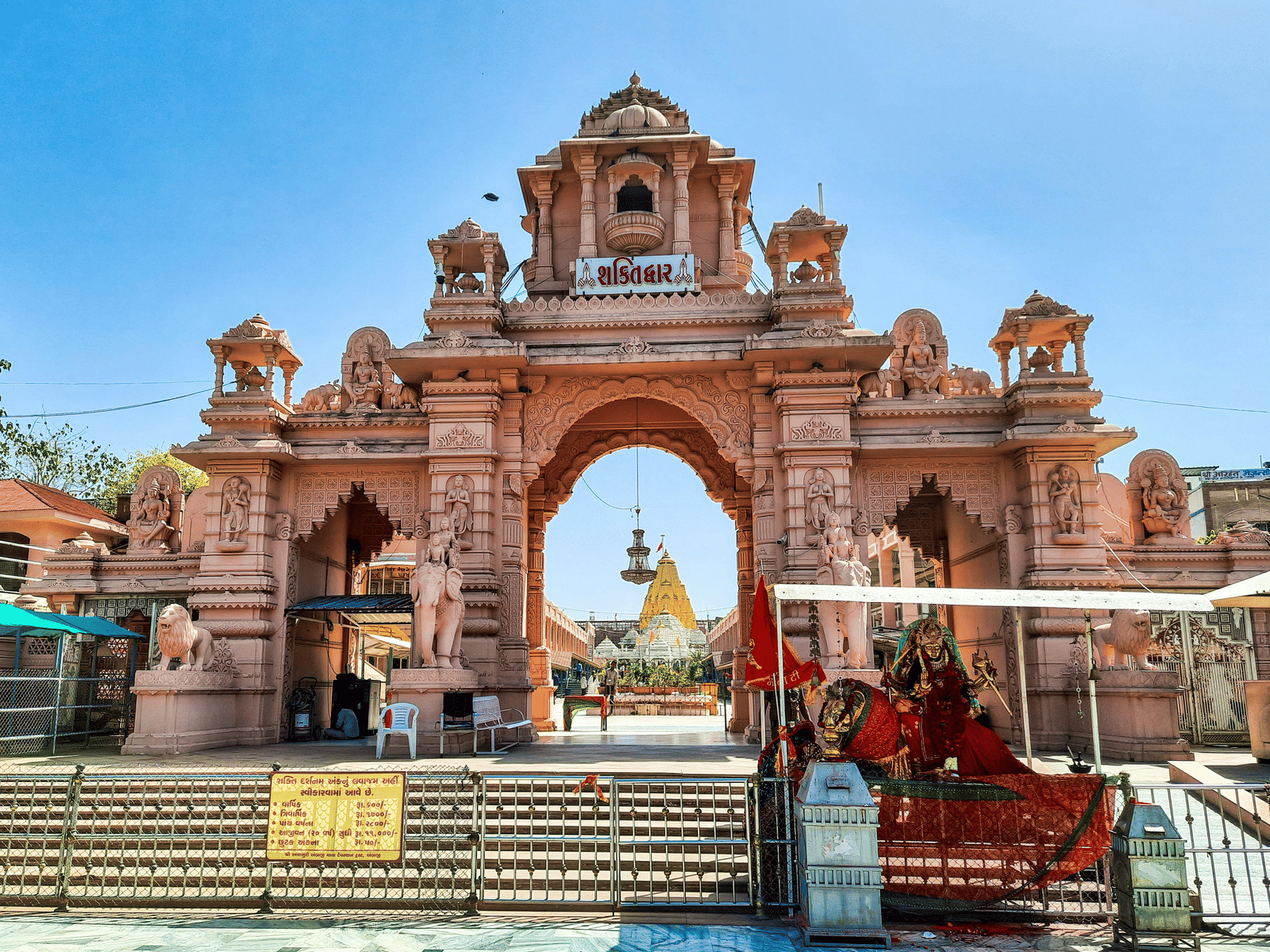
Set at the south-western edge of the Aravalli Range in North Gujarat, Ambaji Temple, Gujarat, is among the 51 Shakti Peethas, the sacred sites where body parts of Goddess Sati are believed to have fallen. Ancient tradition holds that it is Sati’s heart that rests here, making this one of the most spiritually charged pilgrimage destinations in India. The temple has a legacy of over 500 years and draws more than 5 million devotees each year.
Built of white marble with golden spires and a red flag above its shikhara, the inner sanctum contains no idol. A marble inscription of the Viso Yantra, a sacred Vedic geometric text, is fixed within the gokh, a niche in the wall that priests adorn to resemble the form of the Goddess from a distance. The temple is enclosed by Chachar Chowk, an open square where ceremonial havans are performed, and the nearby Mansarovar Kund, a large rectangular pool with stone steps on all 4 sides, draws pilgrims for ritual bathing.
Ambaji Temple Darshan Time
The Ambaji Temple Darshan Time follows a structured 3-session daily schedule, with each session opening after an aarti. Timings may vary on major festival days.
Aarti and Darshan Schedule
Morning Aarti: 7:00 AM - 7:30 AM
Morning Darshan: 7:30 AM - 10:45 AM
Afternoon Aarti: 12:30 PM - 1:00 PM
Afternoon Darshan: 1:00 PM - 4:30 PM
Evening Aarti: 7:00 PM - 7:30 PM
Evening Darshan: 7:30 PM - 9:00 PM

Best Time to Visit Ambaji Temple
Winter (October - February): It’s the most comfortable season for visiting Ambaji Temple. Temperatures range between 10°C and 36°C, and the cooler mornings make darshan queues considerably more manageable. This window also follows Navratri, so crowd levels are lower than during the festive peak.
Summer (March - June): This season sees temperatures between 30°C and 45°C. Plan for the first morning darshan session to avoid peak heat if travelling in this period.
Monsoon (July - September): This season brings approximately 20 inches of annual rainfall and turns the Aravalli Hills a deep green, making it the most visually striking season.
Crowds thin considerably in the rain, though the Bhadarvi Poornima mela falls at the tail end of this period and draws a substantial surge of pilgrims.
Bhadarvi Poornima: The Festival that Draws Millions
Bhadarvi Poornima, the full moon day of the Hindu month of Bhadrapada (typically August or September), is the single largest gathering at Ambaji Temple each year. Devotees from across India make the journey at this time, with many walking the entire distance from their native towns as a personal act of devotion.
The entire Ambaji town transforms during Bhadarvi Poornima: roads fill with pilgrims arriving through the night, and the atmosphere shifts from daily reverence to collective celebration. Navratri, celebrated each October, is another major occasion at Ambaji Temple, marked by garba dances and traditional bhavai theatre performances by the Nayak and Bhojok communities. If you plan to visit during either festival, arrange accommodation well in advance.


Routes to Ambaji
By Road: Ambaji is approximately 19 km from Abu Road, 59 km from Palanpur, and about 185 km from Ahmedabad. Frequent state buses operate from Ahmedabad, Palanpur, and Mount Abu.
By Rail: The nearest railway station is Abu Road, approximately 22 km from Ambaji. Taxis and shared vehicles are readily available at the station for the onward journey.
By Air: The nearest major airport is Sardar Vallabhbhai Patel International Airport, Ahmedabad, approximately 175 km from Ambaji. Taxis cover the distance in around 3.5 hours.
Local Transport: Auto-rickshaws and shared tempos operate within Ambaji town. Taxis are available for visits to Gabbar Hill and other nearby sites.
Places Worth Visiting near Ambaji Temple
Mansarovar Kund (within walking distance): A large rectangular kund adjacent to the main temple, with stone steps on all 4 sides, used by pilgrims for ritual bathing
Gabbar Shaktipeeth (~4 km): A sacred hill 1.5 km above ground level, accessible via 999 steps or a ropeway in service since 1998. Home to an eternal flame, Mataji ka Zula, and Kal Bhairav Temple, it draws over 3 million devotees each year.
Shri Ajitnath Bhagwan Shwetamber Jain Derasar (~52 km): A significant Jain pilgrimage complex atop Taranga Hill, suitable for a half-day trip from Ambaji
Jessore Sloth Bear Sanctuary (~54 km): A protected wildlife area in Banaskantha known for its sloth bear population and natural forest cover
Polo Forest (~78 km): A forested reserve featuring ancient Jain and Hindu temples, streams, and wildlife


Where to Stay near Ambaji Temple: Vinti Resort
The pilgrimage does not end at the temple gate. A stay close to Ambaji Temple lets you return for the early-morning aarti without the rush of a day trip. Vinti Resort is located about 4 km from Ambaji Temple, with the Aravalli Hills as a quiet backdrop.
Our rooms and villas are designed for genuine rest. The Deluxe Rooms look out over mountains and forest greenery, while our Villas sit poolside with mountain views beyond. After a long morning at the temple or the 999-step climb to Gabbar Hill, our swimming pool (open 7:00 AM to 5:00 PM) provides exactly the quiet the body needs.
Pure Vegetarian Dining at Vinti Resort
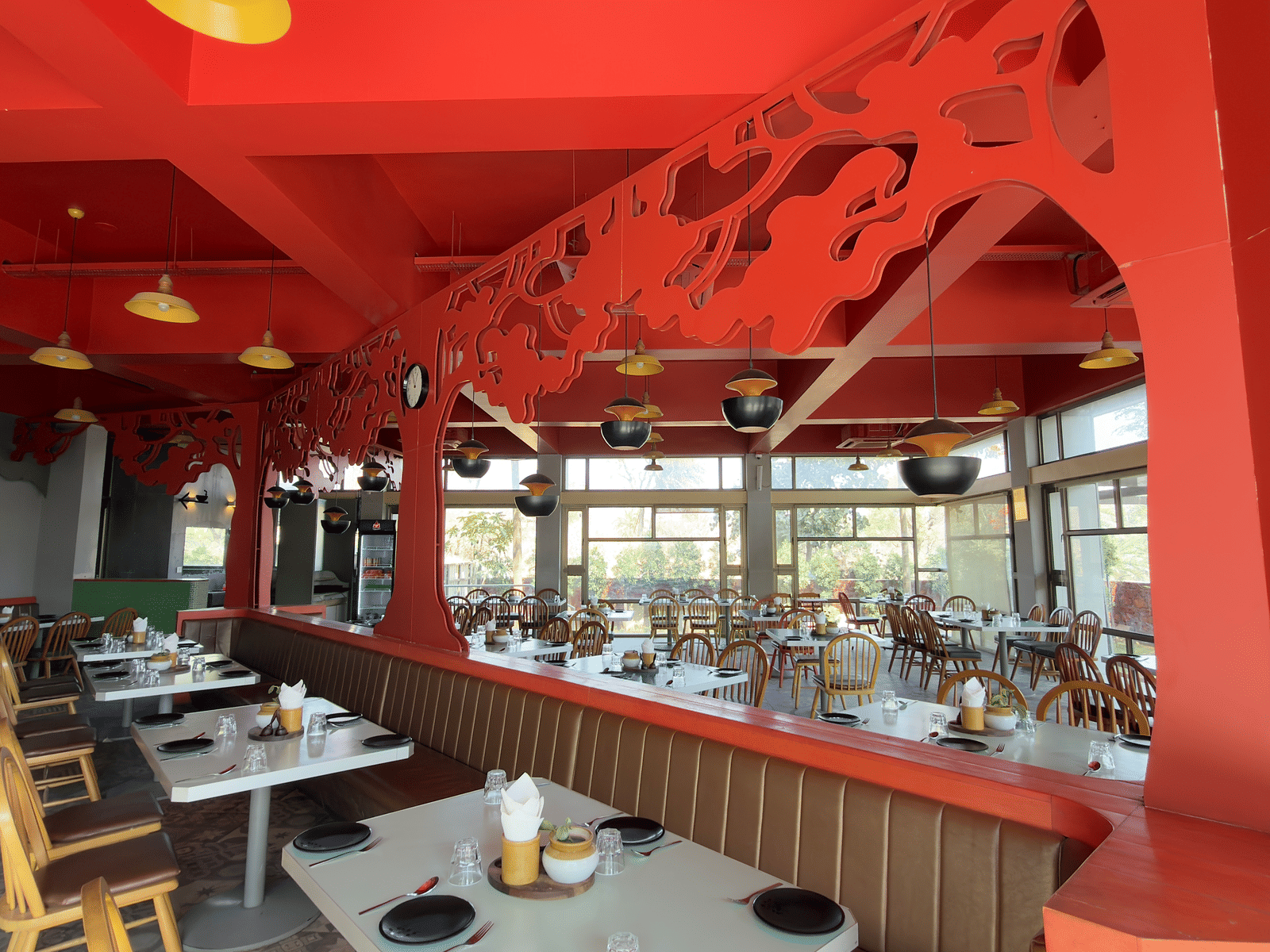
Ambaji is a predominantly vegetarian pilgrimage town, and our dining reflects that spirit entirely. Our restaurant, Eatlicious, is a fully vegetarian space seating up to 120 guests, serving buffet spreads and à la carte meals through the day, with a setting that overlooks the surrounding greenery. For lighter meals and drinks, our Coffee Shop seats up to 40 guests in a cosy space suited for unhurried conversation and fragrant brews.